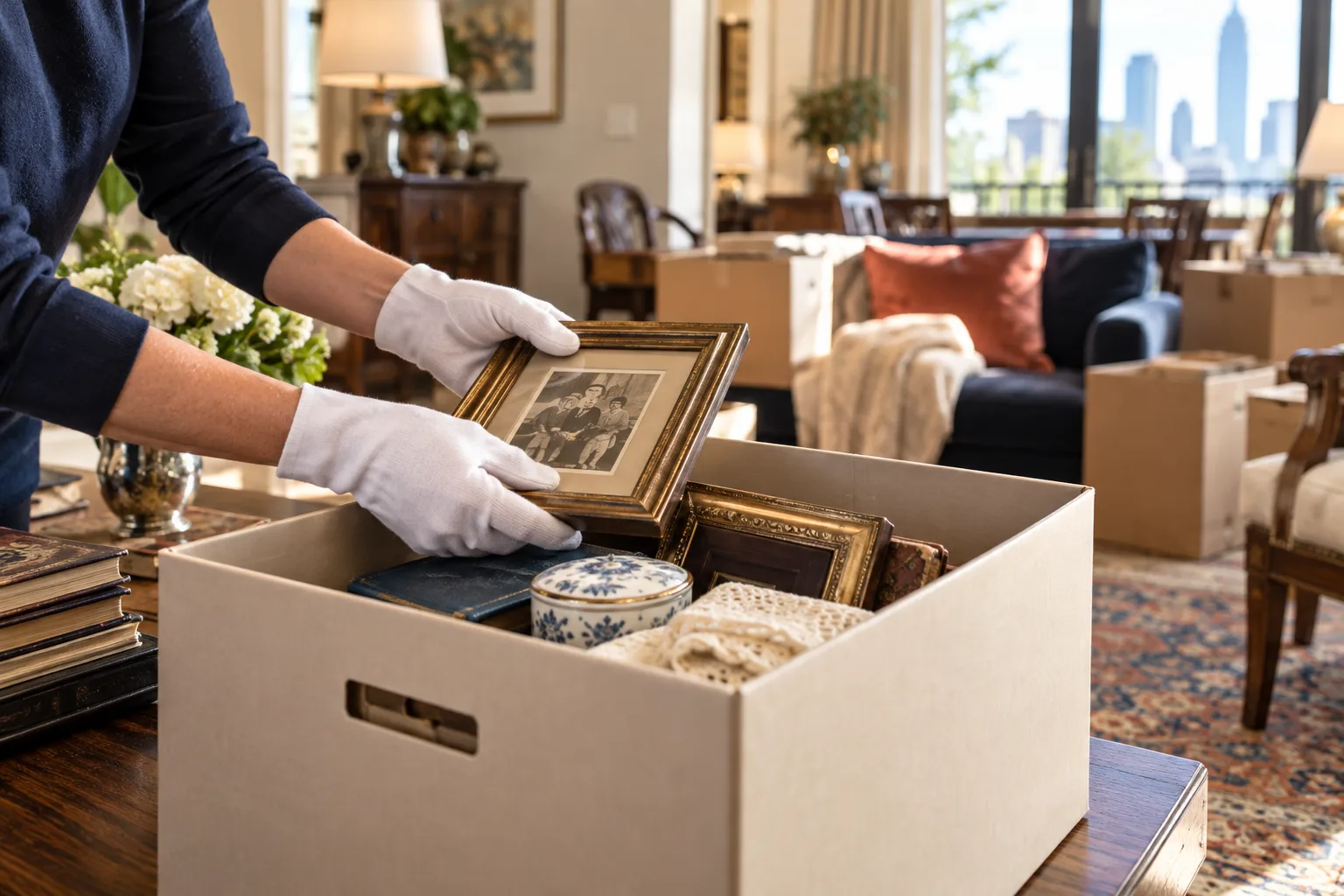
An estate cleanout is easier when the first pass is about decisions, not lifting. Mark four areas: keep, distribute, review later, and remove. Do not let the removal zone spread into rooms that have not been checked.
Protect the items that are hard to replace
Collect keys, identity and financial records, legal papers, photographs, jewelry, medication, military records, and devices that may contain personal data. Put them in a room or vehicle that is outside the work path.
Use a room-by-room decision sheet
| Room | Decision owner | Items still under review | Ready for removal |
|---|---|---|---|
| Living room | Name | Artwork, cabinet contents | Sofa, damaged rug |
| Bedroom | Name | Documents, jewelry | Bed frame, empty dresser |
| Garage | Name | Tools, chemicals | Boxes, shelving |
Photograph the load and the route
Take one wide photo of every approved removal area. Add close photos of heavy pieces, stairs, narrow doors, and the route to the loading position. If a representative will not be on site, confirm exactly who can authorize changes.
Keep hazardous and unknown material separate
Paint, fuel, pesticides, compressed cylinders, medications, and unknown liquids should not be mixed into ordinary removal items. Dallas residents can check the City of Dallas household chemical guidance for current household options.
Final check before the crew arrives
- Every room has a decision owner.
- Personal records and valuables are secured.
- Items that stay are visibly marked or moved.
- Access, parking, gates, and stairs are documented.
- Unknown or hazardous materials are separated.
For service scope, read about estate cleanouts in Dallas, then prepare the estimate details.